Is It Safe To Use Hyaluronic Acid With Niacinamide?
Key Takeaway:
You can safely use hyaluronic acid with niacinamide daily to hydrate your skin while improving texture and oil balance. This simple combo works well for most skin types when used consistently in the correct layering order.
Skincare trends come and go. One week it’s snail mucin, the next it’s salmon DNA. And honestly, some of these ingredients do have real benefits. But beyond the hype, a few classics have quietly stood the test of time.
You’ll find them in routines for every skin type. They’re simple, reliable, and backed by real results.
Two of the biggest standouts? Hyaluronic acid and niacinamide.
So what makes them so special? Why do dermatologists keep recommending them? And how should you actually use them?
In this guide, I’ll walk you through it all. The benefits, how to use each one, whether you can use them together, and how they work for both dry and oily skin.
Think of this as your no-stress, derm-approved breakdown. Let’s get into it.
What is Hyaluronic Acid?
Hyaluronic acid is a naturally occurring sugar molecule found throughout the body. It is mostly present in the skin, eyes, and connective tissues.
It plays an important role in keeping the body hydrated and functioning smoothly. Hyaluronic acid helps lubricate the joints, supports wound healing, and can relieve dry eyes. In fact, the skin alone contains about one-third of the body’s total hyaluronic acid, which shows how important it is for skin health.
One of the most interesting things about hyaluronic acid is how it works. It acts like a magnet for water, pulling moisture into the skin and holding onto it. Its structure is like a long, flexible chain that behaves like a sponge. It can hold many times its weight in water, which helps keep the skin hydrated and smooth This helps the skin stay soft, plump, and fresh-looking.
As we age, the natural levels of hyaluronic acid in the skin begin to drop. At the same time, collagen production slows down. This leads to dryness, fine lines, and less firm skin.
To help with this, hyaluronic acid is often added to serums and moisturizers. Using it regularly in your skincare routine can help keep your skin hydrated, smooth, and supple.
Skin Benefits of Hyaluronic Acid
1. Keeps Skin Hydrated
Hyaluronic acid works as a humectant, helping attract and hold water in the skin. It draws moisture from the environment and deeper skin layers onto the surface. This helps maintain hydration levels throughout the day. Well-hydrated skin appears smoother and more balanced.
2. Supports The Skin Barrier
Hyaluronic acid helps support the skin’s natural barrier by keeping it well hydrated. When the skin retains more moisture, it loses less water through its outer layer. This helps reduce dryness and sensitivity. A stronger barrier also helps protect the skin from everyday environmental stress.
3. Improves Fine Lines And Skin Elasticity
Dehydrated skin often shows fine lines more clearly. Hyaluronic acid restores moisture, which helps plump the skin and soften these lines. It also supports elasticity by maintaining optimal hydration. This gives the skin a firmer and more supple look.
4. Supports wound healing and skin regeneration
Hyaluronic acid helps repair the skin by guiding new skin cells to the damaged area, which speeds up healing. It also supports better blood flow, bringing oxygen and nutrients needed for repair. This helps the skin recover more efficiently.
5. Calms inflammation and soothes skin
Hyaluronic acid keeps the skin hydrated, which helps reduce irritation. Dry skin is more likely to feel tight, red, and sensitive. Adding moisture eases discomfort, softens the skin, making it less reactive.

What is Niacinamide?
Niacinamide is a type of vitamin B3, known as niacin in its natural form. It’s something your body needs every day, which is why you get it from foods like fish, beef liver, nuts, and grains. When you consume more niacin than your body requires, it gets converted into niacinamide, the form you’ll usually see in skincare.
Niacinamide plays an important role in the body by supporting energy production and helping cells function properly. But beyond its internal benefits, it has also become a go-to ingredient in skincare for a reason. It helps strengthen the skin barrier, improve overall texture, and keep excess oil in check without feeling harsh or stripping the skin.
One of the biggest reasons dermatologists love niacinamide is how well it works for almost everyone. It’s generally well-tolerated, even by sensitive or acne-prone skin, and it layers easily with other ingredients in your routine. Studies also show it can support the skin’s natural repair process, which makes it a reliable, low-risk addition to your skincare routine.
You’ll find niacinamide in a wide range of products like serums, moisturizers, cleansers, and night creams. It’s one of those ingredients that quietly does a lot without making a fuss.
Skin Benefits of Niacinamide
1. Smoothes Skin Texture and Minimizes Pores
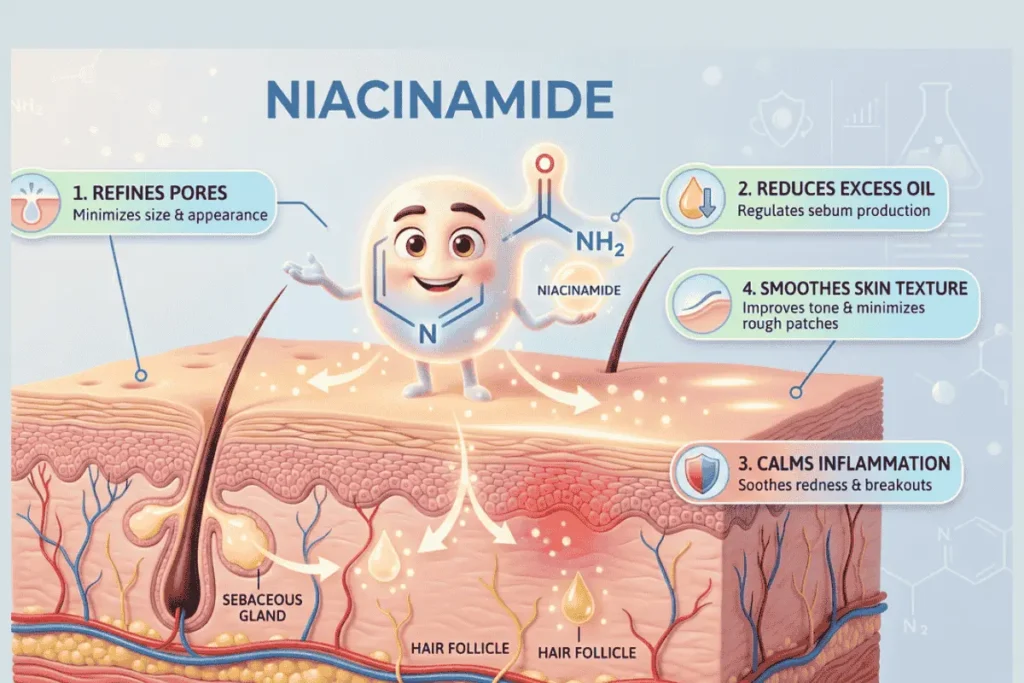
Niacinamide helps improve skin texture by boosting keratin production, a protein that keeps skin firm and smooth. It also helps regulate oil and keeps pores from getting clogged. When pores stay clear and balanced, they appear smaller and less noticeable over time.
2. Controls Excess Oil on the Face
Niacinamide helps balance sebum production, the natural oil your skin makes. Studies show it can reduce excess oil without drying out the skin. This makes it especially helpful for oily and acne-prone skin, as it keeps shine under control while maintaining healthy hydration levels.
3. Supports Skin Barrier
Niacinamide helps strengthen the skin barrier by increasing ceramide production, which are natural lipids that protect the skin. A stronger barrier helps lock in moisture and reduce water loss. This can prevent dry and dehydrated skin, leaving your skin feeling more balanced and resilient.
4. Calms Inflammation
Niacinamide has anti-inflammatory properties that help soothe irritated skin. It can reduce redness, sensitivity, and discomfort caused by conditions like acne or rosacea. By calming the skin, it supports a more even tone and helps skin recover fast from stress and environmental damage.
Can You Use Hyaluronic Acid With Niacinamide?
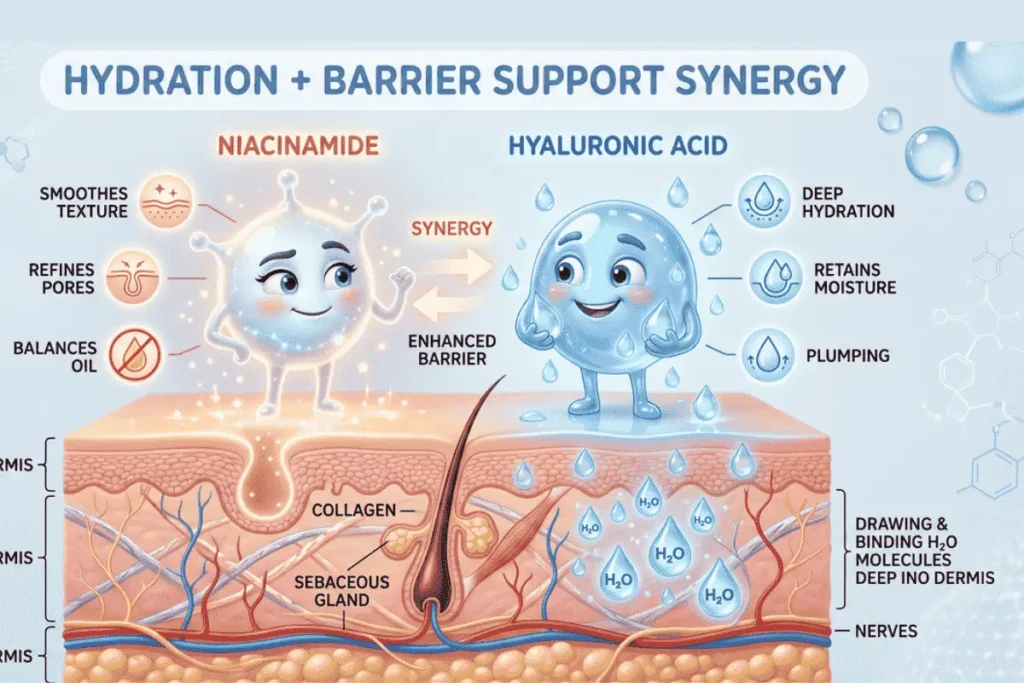
Yes, you can absolutely use hyaluronic acid with niacinamide. In fact, they make a really great pair in your skincare routine. Each ingredient has a different role for your skin, so when you use hyaluronic acid with niacinamide, you get more well-rounded results.
Hyaluronic acid focuses on hydration. It helps your skin hold onto moisture and feel soft and plump throughout the day. Niacinamide, on the other hand, helps refine pores, smooth texture, and support a more even skin tone. Together, they help your skin look fresh, balanced, and healthy.
Another reason this combo works so well is that both ingredients are gentle and suit almost all skin types. Their pH levels are compatible, so there is no risk of them clashing or reducing each other’s effectiveness.
If you want simple, effective skincare, using hyaluronic acid with niacinamide is an easy win for hydrated, smooth, and glowing skin.
How To Layer Hyaluronic Acid With Niacinamide?
If you want the best results when you use hyaluronic acid with niacinamide, following the right layering order makes all the difference. Here is a simple routine you can stick to:
Step1: Cleanse your skin
Start with a gentle cleanser to remove dirt and oil. Fresh skin helps products absorb better.
Step2: Apply hyaluronic acid
While your skin is still slightly damp, apply hyaluronic acid. This helps it pull in moisture and keep your skin hydrated and plump.
Step 3: Apply niacinamide
Next, use your niacinamide serum. It layers easily on top and helps refine pores, smooth texture, and balance oil.
Step 4: Moisturize
Seal everything in with a good non-toxic moisturizer to lock in hydration and support your skin barrier.
Step 5: Sunscreen in the morning
If it is daytime, finish with sunscreen.
You can also use hyaluronic acid with niacinamide at night. Just follow the same layering order, without sunscreen. This combination works especially well in your evening routine.
It also acts as a hydrating buffer while using retinol at night. Together, they can reduce dryness and irritation that sometimes come with stronger treatments like retinol.
Mistakes To Avoid While Using Hyaluronic Acid and Niacinamide
1) Applying hyaluronic acid to dry skin
Hyaluronic acid works best on slightly damp skin. Applying it to dry skin can reduce its effectiveness.
2) Skipping moisturizer after
Do not stop at serums. Always seal in hydration with a moisturizer to prevent water loss.
3) Using too much product
More is not always better. A few drops of each serum are enough.
4) Expecting instant results
Consistency matters. It can take a few weeks to see smoother and more balanced skin.
5) Not following the right layering order
Apply hyaluronic acid first, then niacinamide for best results.
6) Ignoring sunscreen in the morning
Sunscreen is still essential to protect your skin every day.
FAQs
What do hyaluronic acid and niacinamide do?
Hyaluronic acid deeply hydrates the skin by attracting and holding water, making skin look plump and smooth. Niacinamide helps control oil, reduce the look of pores, improve uneven tone, and strengthen the skin barrier. When you use hyaluronic acid with niacinamide, you get both hydration and skin-balancing benefits.
Can I use hyaluronic acid with niacinamide every day?
Yes, you can use hyaluronic acid with niacinamide every day. Both are gentle and suitable for a daily morning and nighttime routine for most skin types.
What is the difference between hyaluronic acid and niacinamide?
Hyaluronic acid is a humectant that helps provide moisture to the skin. Niacinamide is a form of vitamin B3 that improves oil control, texture, and overall skin clarity.
How to pair hyaluronic acid and niacinamide?
Cleanse first, apply hyaluronic acid on damp skin, then apply niacinamide, followed by moisturizer. This is the best way to use hyaluronic acid with niacinamide for balanced results. If you have oily skin, you may apply niacinamide first since regulating oil is your main priority.
Which to layer first, niacinamide or hyaluronic acid?
Hyaluronic acid should go first because it works best on damp skin. Then apply niacinamide to support and lock in benefits.
Which is better for oily skin: niacinamide or hyaluronic acid?
Niacinamide is better for oily skin because it helps control excess oil. Hyaluronic acid is still important because oily skin can also be dehydrated.
Does niacinamide stop oily skin?
Niacinamide does not stop oil completely, but it helps regulate sebum production over time, making skin look less greasy.
What is the wrong way to use hyaluronic acid?
The wrong way to use hyaluronic acid is to apply it to dry skin or not seal it with moisturizer afterwards. This can reduce hydration benefits when you use hyaluronic acid with niacinamide or on its own.