Natural Tanning Oil At Home: DIY Recipe and Tanning Tips
Key Takeaways
- Natural Tanning oil can give a gentle sun-kissed glow while nourishing your body.
- Oils like Avocado, olive, carrot, grapeseed, and raspberry are commonly used for a natural tan.
- Tanning oils do not replace sunscreen. Always apply a broad-spectrum SPF before tanning to prevent sunburn and damage.
- Be mindful of your sun exposure and moisturize well to avoid dehydrated skin.
- Patch test before using diy tanning oils
Do you love the golden glow you get after a relaxing beach day? Yeah, me too. But of course not at the cost of damaging my skin.
So, here I am going to share different natural tanning oils that support gentle tanning without the harm of synthetic fragrance, harsh chemicals, or PUFA oils. You will also learn to make natural tanning oil at home that you can use to nourish your body and get a little melanin boost while you are at the beach, mountain, or anywhere in nature.
That said, this is not a click-baity get-tan-dark guide. Tanning comes with responsibility and mindfulness.
So, alongwith discussing oils, I will also address the security concerns associated with tanning and the best tanning practices for safer sun exposure.
What is a Natural Tanning Oil And How Does it Work?
Natural tanning oil is simply a plant-based oil that accelerates the tanning while nourishing your body. There is a hormone called melanin that gives color to your body. Melanin is produced in response to sun exposure and protects your body from UV rays.
The tanning oil that you apply to the body acts as a magnifying glass. The glossy oil film reduces reflection, focusing more sunrays on the surface of your skin. Increased absorption of UV rays triggers melanocytes in the skin to produce more melanin as a defense.
Not only that, but natural tanning oils also keep your skin moisturized, preventing dehydrated skin from Sun exposure, giving your body a healthy sun-kissed bronze.
Should You Apply Tanning Oil with SPF?
Sun exposure carries some health risks, and it is important to be aware of them. Exposure to harmful UV rays speeds up collagen breakdown in the skin. Over time, this leads to pronounced fine lines and wrinkles. UV rays can also damage DNA, increasing the risk of skin cancer. Prolonged sun exposure without care can result in dryness and uneven skin tone.
Skin color matters too. People with lighter skin tone (less melanin) have less natural protection against UV rays. So people with pale skin have a higher risk of sun damage.
This is why sunscreen is a non-negotiable. You should always apply a broad-spectrum SPF before going out in the sun, whether you plan to tan or not. Most natural tanning oils offer little to no SPF protection. So, always pair them with sunscreen for skin protection.
Benefits of Using A Natural Tanning Oil
1. Faster Tan
Natural tanning oils concentrate more UV rays on your skin, enhancing their absorption. This way, these organic bronzer oils accelerate tanning by stimulating melanin production.
2. Natural Tan
Plant-based organic bronzing oils do not contain artificial fragrance, harsh chemicals, or mineral oil, and are low in PUFA. Therefore, using a natural tanning oil does not pose additional skincare risks beyond Sun exposure.
3. Skin Hydration
A natural tanning oil, such as avocado oil, contains hydrating ingredients and antioxidants. So it locks in moisture, provides nourishment, and prevents rough, dehydrated skin.
4. Healthy Glow
The shiny layer of bronzing oil gives a glass-like sheen to your skin, making it appear glowy, healthy, and supple.
Risks of Using Tanning Oils in the Sun
Most health risks associated with sun tanning come from exposure to ultraviolet radiation.
1. Risk of Sunburn
Unprotected sun exposure can damage the outer layer of skin, triggering an immune reaction. In response, your skin can look red and itchy. It also becomes painful at the sunburnt spot and gives off heat.
2. Premature Aging
UV rays can damage the collagen structure in your skin, which causes wrinkles and dullness.
3. Long-term Damage
Continuous exposure to the sun can cause permanent changes in your DNA, which can lead to skin cancer.
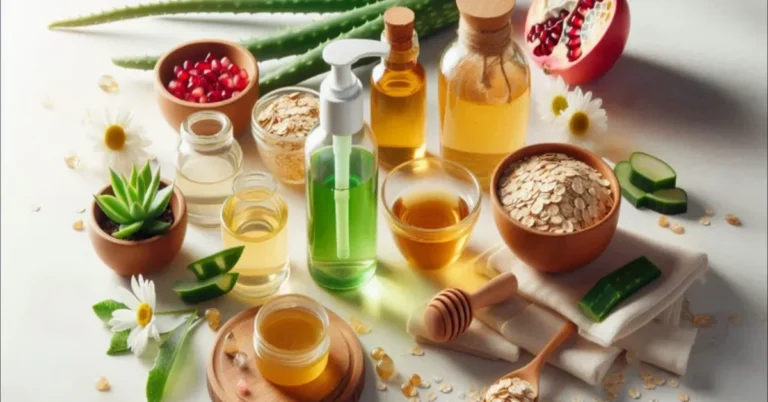
5 Natural Tanning Oils For a Healthy Sun-kissed Glow
1. Carrot Oil
Carrot oil is first on the list of natural tanning oils. It is highly known for giving a golden bronze on your body naturally. Carrot oil is high in beta-carotene, the pigment responsible for its orange-brown color. When applied topically, beta carotene subtly imparts its tint to your skin, giving it a naturally tanned look. Beta carotene also promotes vitamin A production in the body. Vitamin A is supposed to play a role in the melanin production process.
Moreover, carrot oil contains antioxidant vitamins and fatty acids that moisturize and repair the skin barrier and fight free radicals responsible for premature aging.
Some studies also suggest that carrot oil has sun protection properties. Studies say that carrot seed oil may help enhance UVB protection when used alongside sunscreen. However, it should never replace a broad-spectrum SPF.
2. Grape Seed Oil
Grape seed oil also makes a great natural tanning oil, thanks to its lightweight, fast-absorbing texture. It is also rich in vitamin E, polyphenols, and other antioxidants that have anti-aging and anti-inflammatory properties. Plus, it helps prevent water loss and keeps skin soft.
Grape seed oil provides some protection against UV rays due to polyphenol content.
3. Avocado Oil
Avocado oil is full of skin-loving nutrients. It is rich in vitamin E, D, antioxidants, beta carotene, fatty acids, and even protein. This nourishing oil moisturizes skin, repairs cell damage, and soothes itchy skin. It also supports collagen production and helps maintain soft, youthful skin. With its inherent mild SPF, it makes it a great natural tanning oil for a sun-kissed glow.
4. Raspberry Oil
Raspberry oil is lightweight, moisturizing, and non-comedogenic, making it a perfect choice for an organic bronzer oil. It is full of antioxidants and fatty acids that are beneficial for dry and aging skin. While it does have a natural SPF, it is not enough to provide full sun protection. So, be sure to pair it with a broad-spectrum sunscreen fo for tanning.
5. Olive Oil
Avocado oil, Popular among beachgoers as a natural tanning oil, deeply moisturizes and soothes skin with vitamins and antioxidants. It helps boost melanin production for a fast tan by focusing sunlight on the skin. It also provides minimal natural sun protection, so pairing it with sunscreen is essential before tanning.
Homemade Tanning Oil Recipe
Below, I have shared my diy recipe for natural tanning oil. Here’s the safety disclaimer first.
Safety Disclaimer
Tanning always comes with risks, and this DIY tanning oil is shared only for those who choose to tan despite them. Please use it thoughtfully, apply with a sunscreen, closely examine your skin, and move out of the sun at the first sign of redness. This recipe hasn’t been medically reviewed and is based on personal experience, not professional medical advice.
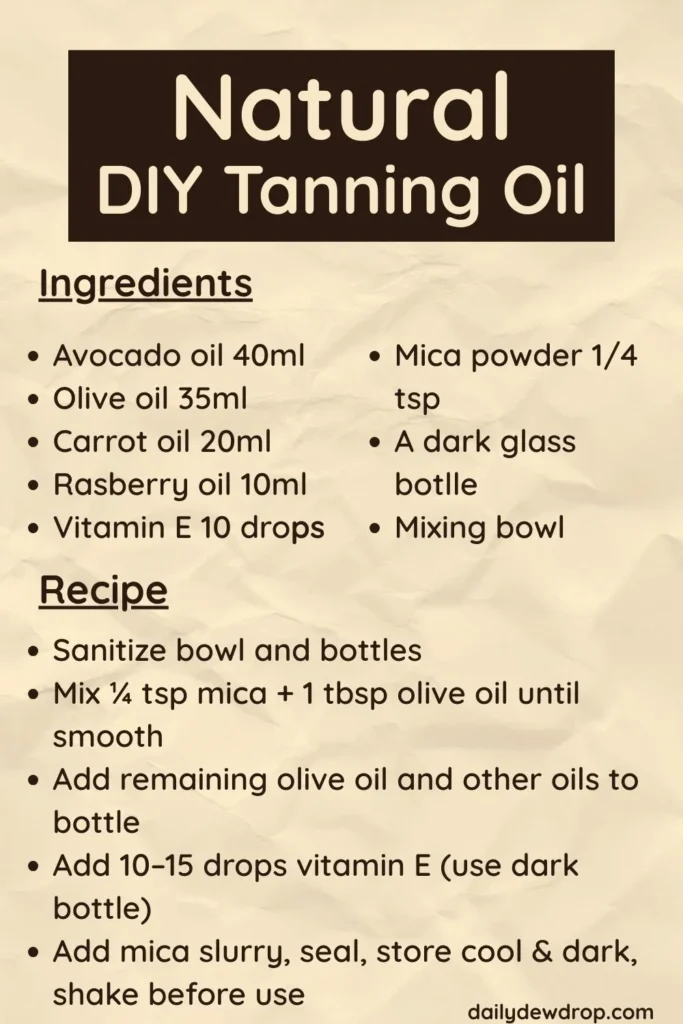
Ingredients
- Avocado oil 40ml
- Olive oil 35ml
- Carrot oil 20ml
- Raspberry oil 10ml
- Vitamin E 10 drops
- Mica powder 1/4 tsp
- A dark glass bottle with a dropper
- Mixing bowl
Recipe
Step1: Clean Every Utensil
Sanitize your bowl and bottles before use to avoid contamination
Step 2: Prepare Mica Slurry
Place 1/4 tsp of mica powder in a bowl and add one tablespoon of olive oil. Mix until there are no clumps. Save the remaining olive oil.
Step 3: Combine everything
Add the remaining olive oil and the rest of the oils mentioned above to a bottle.
Step 4: Preserve
Add 10-15 drops of vitamin E to the bottle. Vitamin stops oxidation and prevents your tanning oil from going rancid. Be sure to use a dark bottle to keep vitamins stable.
Step 5: Add Mica
Last, add the mica slurry into the bottle and close the lid. Place it in a dark, cool place, and you can enjoy its benefits for the entire summer. But don’t forget to shake it before using.
Note For Acne-Prone Skin
If you have oily, acne-prone skin, replace olive oil with grape seed oil and use the measurements below for oils. Keep everything else the same.
- Grape seed oil 70 ml
- Raspberry oil 20m
- Carrot oil 10 ml.
Using grapeseed oil will shorten the shelf life of the DIY mixture, so try to use it in one summer.
Step-by-Step Tanning Routine
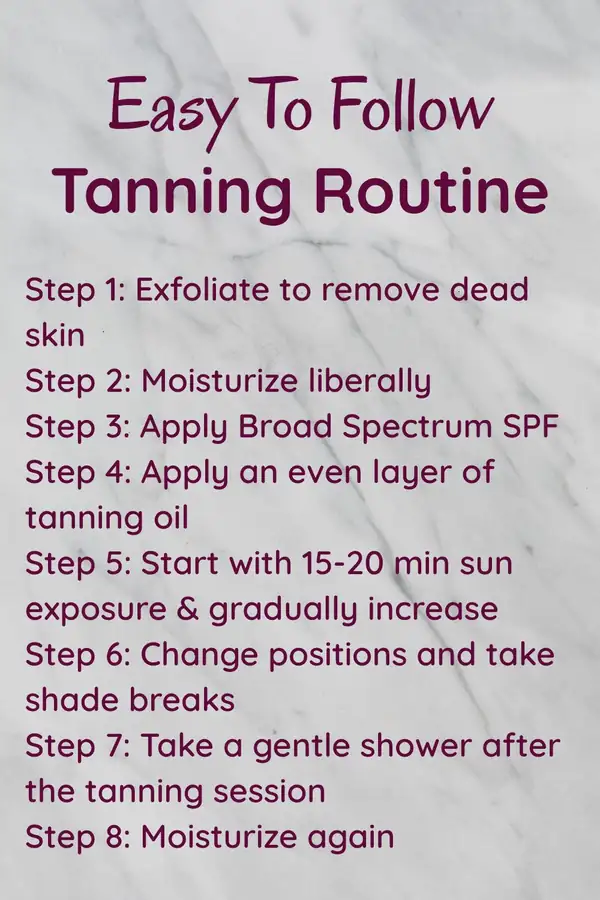
Step 1: Exfoliate your body the morning before tanning to remove all the dead skin buildup. Depending on your skin type, you can choose a gentle chemical exfoliator to create a smooth base.
Step 2: Once your skin is all cleared of debris, moisturize it liberally. Sun exposure can really dry out your skin, so sealing in beforehand is essential.
Step 3: Apply sunscreen to all exposed body parts before heading out in the sun. No compromise on this one.
Step 4: Put an even layer of tanning oil all over your body after the sunscreen has settled.
Step 5: If you are new to tanning, limit sun time to 15-20 minutes. Gradually increase exposure based on your skin tolerance. This will help you avoid sunburn and get a natural-looking tan safely. You can even take a shade for a few minutes if the sun feels harsh.
Step 6: Change your position every few minutes, as it will help you get an even body tan and prevent burns in one area.
Step 7: After your tanning session, let your body cool down naturally.
Step 8: Take a shower to remove sunscreen, oil, and sweat. Avoid using harsh cleansers when washing your body.
Step 9: Follow up with a hydrating skincare routine to replenish lost moisture and soothe sun-exposed skin.
Step10: Do not forget to moisturize and apply sunscreen before every tanning session.
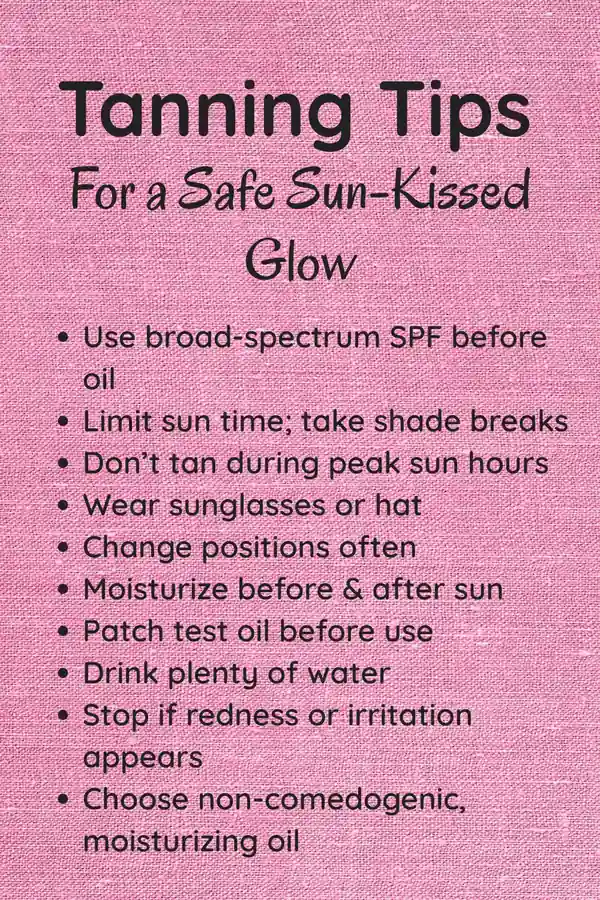
Tanning Tips For Safe Sun Exposure
Follow these safety tips while using a natural tanning oil out in the sun.
- Broad Spectrum SPF. Apply a broad-spectrum sunscreen before tanning oil. This step is mandatory to prevent harmful sun radiation. According to the American Academy of Dermatology, sunscreen should have an SPF 30 or higher. Oil should be the last step of your tanning prep according to the molecule size rule.
- Limit Sun Exposure. Avoid excessive tanning by limiting long sun exposure in a single stretch. Prolonged sun exposure can do more harm than good, especially if you fall asleep under direct sunlight. If you plan to be outside for an extended period, take breaks in the shade and reapply sunscreen every two hours to keep your skin protected.
- Choose The Right Time. Avoid sun exposure during peak hours, that is, between 11 am and 3 pm. UV rays are at their highest during this time, so you can easily get burned. If you’re planning on tanning, do it before these hours for a gradual and safer tan.
- Wear Protective Accessories. Sun exposure can damage your eyes, so wear sunglasses before sunbathing. You can also wear a hat or other accessories for UV protection.
- Move Frequently. Keep changing your position to avoid getting a sunburn in any one area.
- Moisturize. Moisturize generously after sun exposure to avoid getting dry skin. Use hydrating products during skin prep.
- Patch Test. Patch test the oil before applying it all over your body to check for any sensitivity or allergic reaction
- Stay Hydrated. Drink plenty of water to maintain hydration level, as overexposure to the sun can damage the barrier and increase water loss.
- Watch For Skin Reaction. Take a break from the sun if you notice any redness or irritation on your body.
- Choose the Tanning oil wisely. The tanning oil you use should be non-comedogenic and should have moisturizing properties.