Fermented Rice Water For Skin: Uses, Benefits, & DIY Methods
Key Takeaways
- Fermented rice water for skin works by breaking rice nutrients into more absorbable forms, helping skin look bright, hydrated, and clearer.
- Fermentation creates natural acids, antioxidants, and amino acids that brighten skin, refine pores, and support collagen.
- It’s more effective than regular rice water due to its skin-friendly pH and deeper penetration
- You can make fermented rice water for skin at home using a simple soak or controlled koji method for better stability and results.
Use of fermented rice water for skin dates back centuries to the beauty rituals of ancient Japanese and Chinese women.
In Japan, Geisha and court women were known to bathe in milky rice water to achieve an ageless, porcelain-like skin. Similarly, the red yao women of the Chinese village fermented local longji rice and used it as a daily cleanser.
But why rice water? And why ferment it? What makes this humble kitchen ingredient such an essential part of both traditional and modern skincare?
Read along to discover how you can achieve geisha-like glass skin by making fermented rice water at home.
What is Fermented Rice Water: The Science
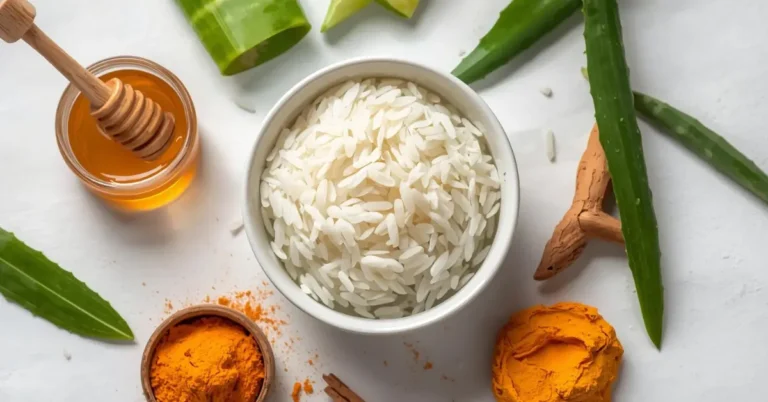
Fermented rice water is just regular rice water that is left to sit in the open air for several hours.
During this time, it develops beneficial microbes that break down the rice starches and proteins into smaller compounds. The nutrients become more bioavailable and easily penetrate the deeper layers of skin.
The rice water transforms into a magical elixir of amino acids, vitamins, antioxidants, and enzymes. It can help lighten, brighten, repair, and clear your skin effectively.
The fermentation process also produces lactic acid as a byproduct, which gives the rice water its sour, tangy smell. The pH of the rice water becomes slightly acidic, which matches the natural Ph of skin and scalp. So, it is well tolerated with minimal chances of irritation when used correctly.
Regular vs. Fermented Rice Water
Regular rice water | Fermented rice water |
|---|---|
Milky water left after rinsing rice | Rice water left at room temperature for several hours |
Contains starch and basic surface-level vitamins | Nutrients become more bioavailable after fermentation |
Provides basic hydration benefits | Rich in collagen-boosting amino acids, antioxidants, and organic acids |
Can be used as-is | May need dilution due to higher potency |
Very mild or no smell | Slightly sour, tangy smell |
Almost neutral pH (6–7) | More acidic, closer to skin’s natural pH |
Benefits of Fermented Rice Water For Skin
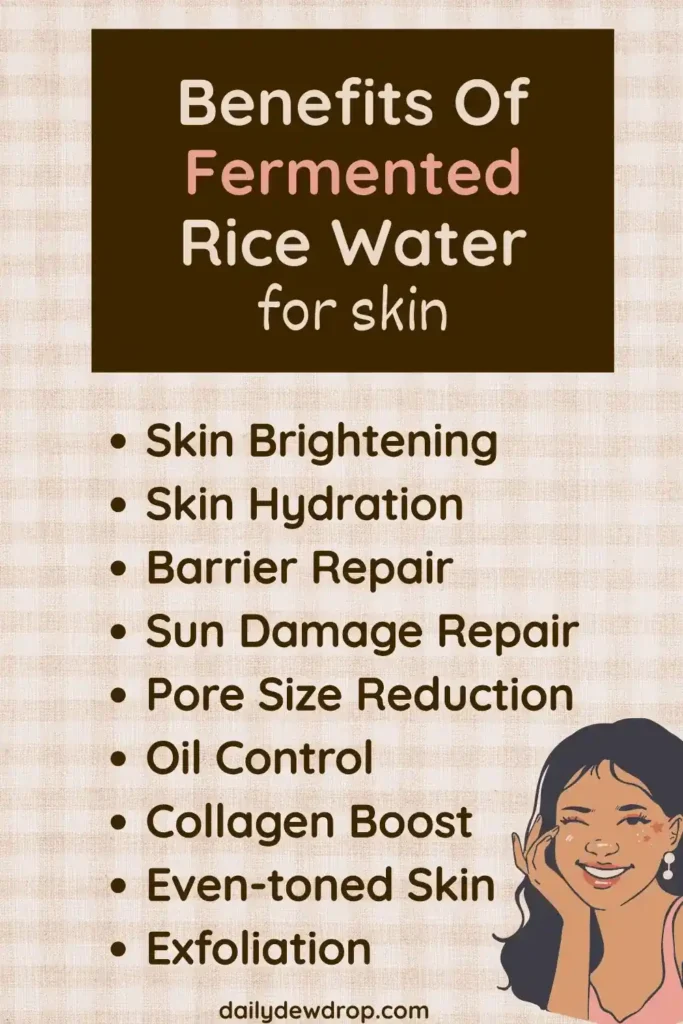
Skin Brightening and Pigment Correction
Environmental stressors and hormonal imbalance can trigger excess melanin production in our bodies. This overproduction of melanin triggers hyperpigmentation and uneven skin tone.
There is an enzyme called tyrosinase, which actively produces melanin. Fermented rice water naturally contains kojic acid, ferulic acid, and glutathione, which are known to inhibit tyrosinase activity and thus limit melanin production. Lower melanin levels result in brighter, even-toned skin.
In fact, a study suggests that fermented rice water visibly improves skin brightness within seven days.
Skin Hydration and Barrier Repair
A damaged barrier leads to excessive water loss from the outermost layer of the skin. This insufficient water in the skin layers leads to rough, dehydrated skin.
Fermented rice water contains compounds like glucoside, biotin, and glucosylceramide, which are known to strengthen the skin barrier. These compounds lock moisture by preventing trans-epidermal water loss.
No wonder Japanese women were bathing in rice water for hydrated, soft, and plump skin.
Anti-Aging and Collagen Boosting
Honestly, most modern lifestyles aren’t very skin-friendly. Excessive sun exposure, sugary food items, and stress accelerate the collagen breakdown in the skin. A weaker collagen structure leads to more pronounced fine lines, wrinkles, and premature aging.
Amino acids and vitamins B12 and B3 found in fermented rice water can act as a natural anti-aging agent for your skin. It also contains GABA, an ingredient that relaxes wrinkles and creates an effect similar to Botox. Together, they stimulate collagen production and help reduce the look of wrinkles.
Pore Refining and Oil Control
Overproduction of sebum often enlarges your pores. Combine that with dirt, bacteria, and dead skin cells around, and your worst nightmare will come true: clogged pores and acne.
This is where fermented rice water for skin comes in. The milky rice water is rich in inositol and natural enzymes that control sebum production and unclog pores. It also contains galactomyces that shrink the pore size and refine skin texture.
Sun Damage Repair
Sun exposure is one of the leading causes of skin aging. In fact, a study says nearly 80% of visible signs of aging are caused by the sun.
During the fermentation process, rice releases an antioxidant called ferulic acid. Ferulic acid is shown to fight free radicals and protect the skin from the harmful effects of UV rays. It also helps reduce dark spots and supports collagen production for a youthful complexion.
Exfoliation
Dead skin buildup can make your skin look dull, tired, and lifeless. And if you don’t want to spend bucks on buying fancy chemical exfoliants, you can use fermented rice water for skin exfoliation.
Fermented rice water contains lactic acid, glycolic acid, and enzymes that naturally slough away dead skin cells and increase cell turnover. It is specifically beneficial for improving the rough texture of dry skin.
How To Prepare Fermented Rice Water At Home?
I am going to share two DIY methods for preparing fermented rice water for skin. One is a controlled method, and the other is a little freer. Read and decide which works for you.
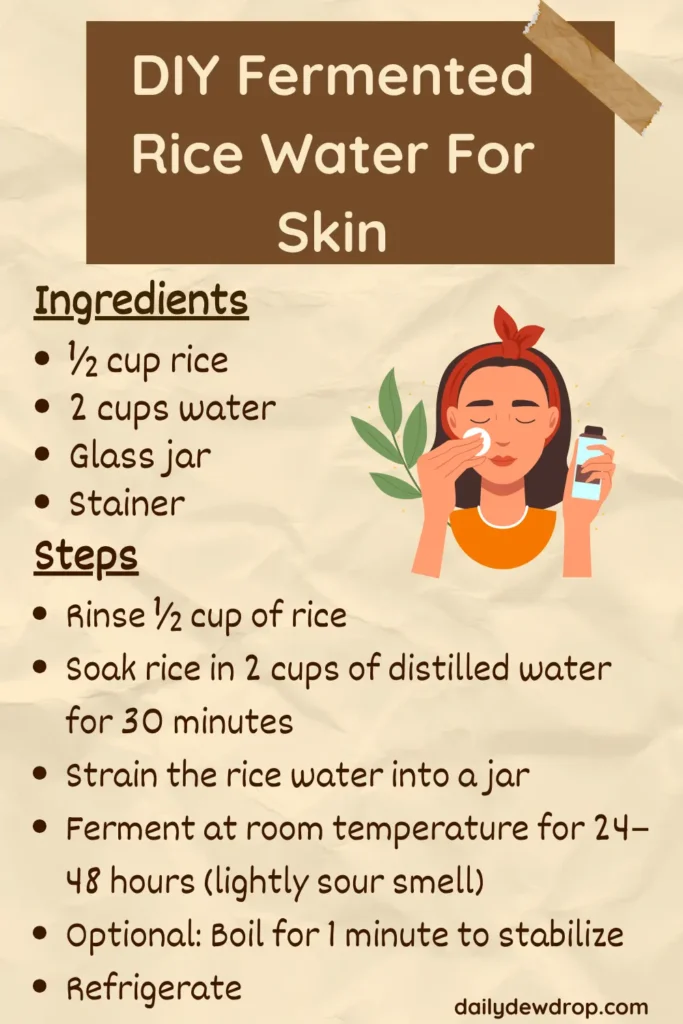
The Simple Soak Method
Step 1
Take 1/2 cup of rice and add 2 cups of distilled water. You can take any organic rice of your choice or jasmine rice, as it has a pleasant smell. Rinse your rice before starting the process to remove any impurities.
Step 2
Soak the rice in water for 30 minutes
Step 3
Strain the rice water in a glass or ceramic jar
Step 4
Leave the jar at room temperature for 24-48 hours until it smells slightly sour but not unpleasant.
Step 5 (optional)
You can boil the fermented water for a minute to stabilize the mixture and kill any harmful bacteria. However, boiling might slightly affect the structure of amino acids or vitamins in the water.
Step 6:
Your fermented rice water is ready. Refrigerate it
Note that fermentation time can vary depending on the room temperature and the type of rice used. So, keep checking the rice to see what works best for you.
The Process
Natural bacteria and yeast in the air and rice feed on the starch and produce acid, vitamins, ferulic acid, and inositol
Pros
- The process is cheap and fast
Cons
- This process has a high spoilage risk if not done correctly
- Nutrient levels are inconsistent
- The pH can be too acidic.
The Controlled Koji Method
Ingredients
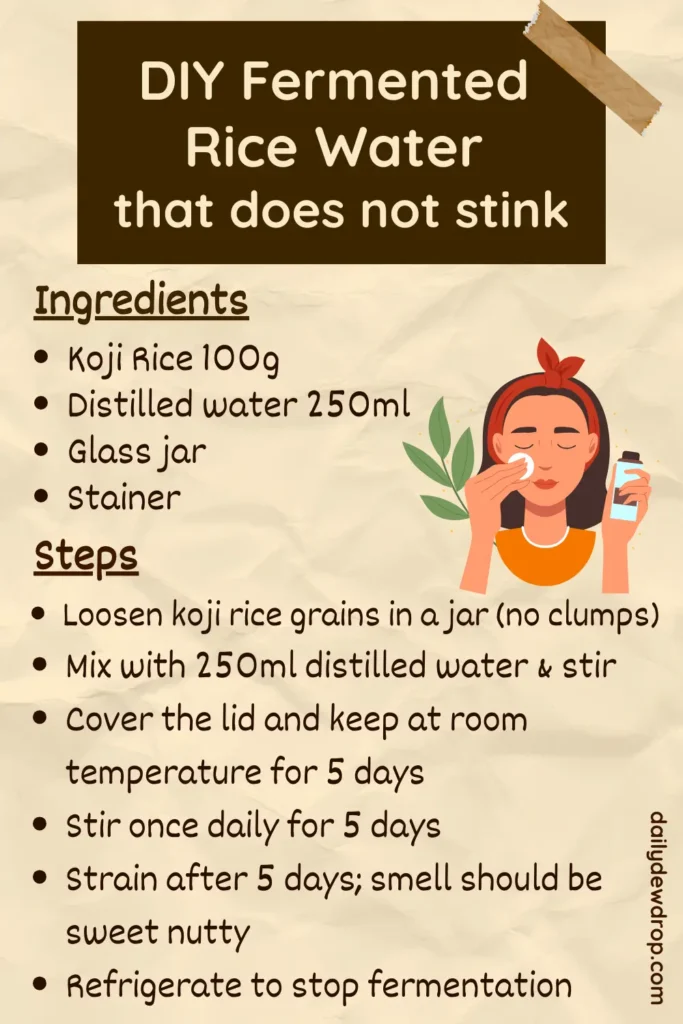
- Freeze-dried koji rice (you can easily get it from Amazon)
- Distilled water
- Glass jar/ziplock bag
- Stariner
Step 1
Put the koji rice in the container and separate the grains. There should not be any clumps.
Step 2
Add distilled water and stir until rice and water are fully mixed. Use 250 ml of water for every 100 g of rice.
Step 3
Cover the lid and keep it at room temperature for 5 days
Step 4
Open the jar and mix it gently once daily for 5 consecutive days.
Step 5
After 5 days, strain the rice water in a separate jar. It should have a mildly sweet and nutty smell.
Step 6
Refrigerate to stop the fermentation process. Your fermented rice water for skin is ready.
The Process
Freeze-dried koji rice is already inoculated with the mold Aspergillus oryzae. During the fermentation process, the mold secretes enzymes that break down rice starches into amino acids, kojic acid, antioxidants (ferulic acid), and vitamins.
Pros
- A high concentration of nutrients is beneficial for the skin
- The pH level is close to the skin
- Smell is nutty
- Less risk of spoilage
Cons
- The process requires a longer time
- You will need to purchase koji rice
- The process requires attending once a day
How To Use Fermented Rice Water For Skin
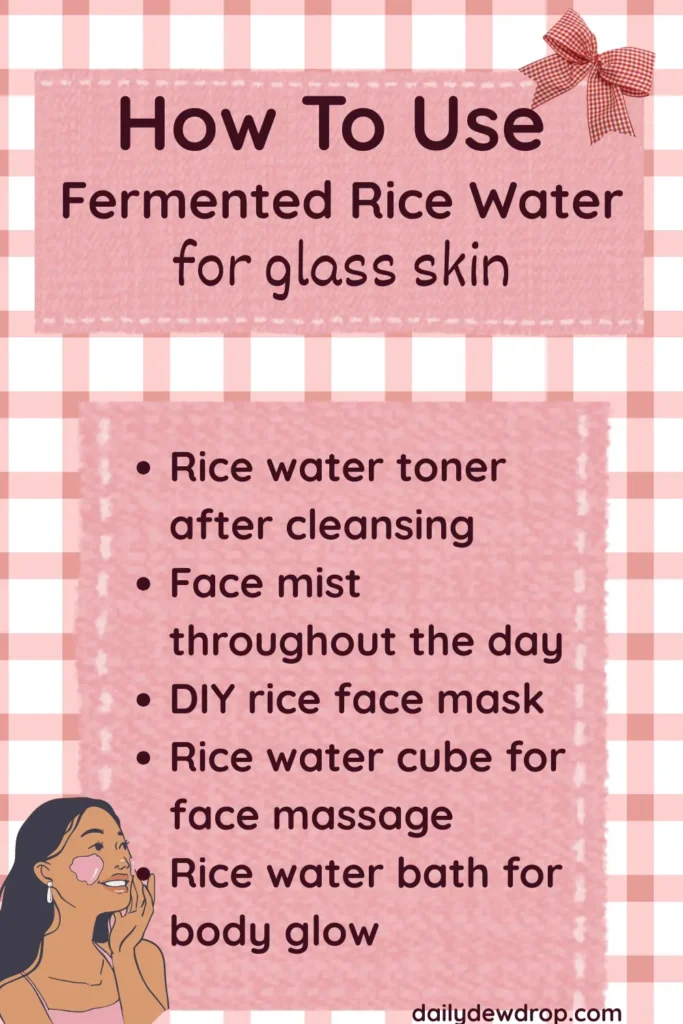
You can use fermented rice water for skin benefits in the following ways.
Rice Water Toner
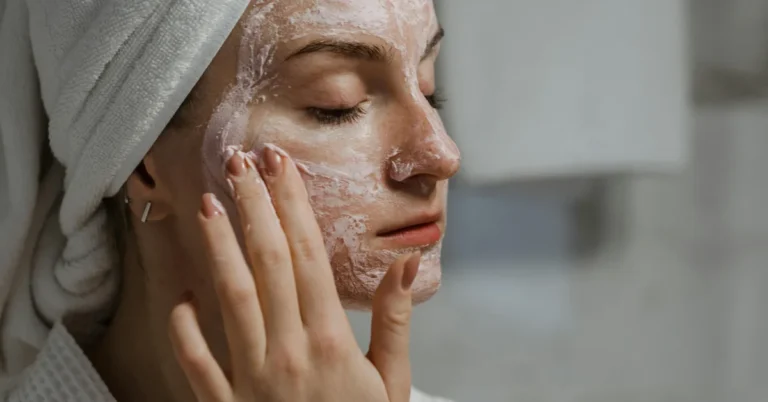
One of the most effective methods to incorporate fermented rice water in your skincare routine is to use it as a toner. Soak a cotton pad with rice water and swipe it over your face after cleansing. It will hydrate, brighten, and also balance the skin’s pH.
Facial Mist
Another easy way is to pour the rice water into a spray bottle and use it as a face mist. You can spritz it throughout the day for skin glow and hydration.
DIY Face Mask
You can also use the fermented water as a base for diy face masks. Mix it with ingredients like rice flour, aloe vera, or honey to create a mask according to your skin’s needs.
You can check out my blog, which covers seven different ways to make a diy rice face mask at home.
Rice Water Cubes
Pour the rice water into an ice tray and freeze. Once frozen, take out a cube and gently massage it over your face. This helps soothe inflammation, tighten pores, and calm skin.
Rice Water Bath
This way is a bit unusual but totally worth trying. If you love a geish-like glow on your body, add a cup of fermented rice water to your bath. Your skin will feel nourished over time with consistent use.
Mistakes To Avoid While Using Fermented Rice Water
- Do not use tap or chlorinated water. It can kill the beneficial bacteria and contaminate the mixture. Always try to use distilled or purified water.
- Do not use regular rice without rinsing it. Koji rice, however, doesn’t require rinsing.
- Fermented rice water has an acidic pH that might irritate sensitive skin. So, dilute it with plain water before using.
- Never use the rice water if it has a foul, sour, or rotten egg-like smell. Just throw it away.
- Never use it on your face without patch testing first.
- Do not leave it out after fermentation is over. You must refrigerate it and use it within 14 days.
FAQs
Can rice water lighten skin?
Yes, fermented rice water can contain ingredients like kojic acid, ferulic acid, and other antioxidants, which help inhibit excess production of melanin and lighten skin. Rice water can help reduce hyperpigmentation and dark spots with consistent use.
How to prepare rice water for skin whitening
To prepare rice water for skin whitening and brightening, you can ferment it using a quick diy method.
Rinse 1/2 cup of rice and add 2 cups of water. Soak for 30 minutes and strain the water in a jar. Keep the rice water at room temperature for 24-48 hours until the smell is slightly sour (pleasant). Refrigerate and use within 14 days.
When should you use rice water for your face?
Here are the best times to use rice water for the face:
Morning: Use a toner to hydrate and prep skin
Night: Apply after cleansing to keep skin hydrated throughout the night.
How often: Use it once or twice a day, 2-3 times a week.
Is rice water good for the skin?
Yes, fermented rice water can help brighten, hydrate, exfoliate, and repair your skin. It also controls oil production and has anti-aging benefits.
Is rice water harmful to the skin?
Rice water is generally safe, but it can irritate if
It is Spoiled
It has a foul smell.
It is used undiluted.
You have skipped patch testing.